
Historical reading · v228 · 2026-11-19. Read the current understanding and full revision history →
Historical reading v228 · 公开专题 · 中美关系与中国外交
U.S.–China & China's Diplomacy
The U.S.–China relationship and its friction points (tech, trade, Taiwan), set against Beijing's broader great-power and Global South diplomacy — summits, MFA statements, partnerships, and how China frames its global posture.
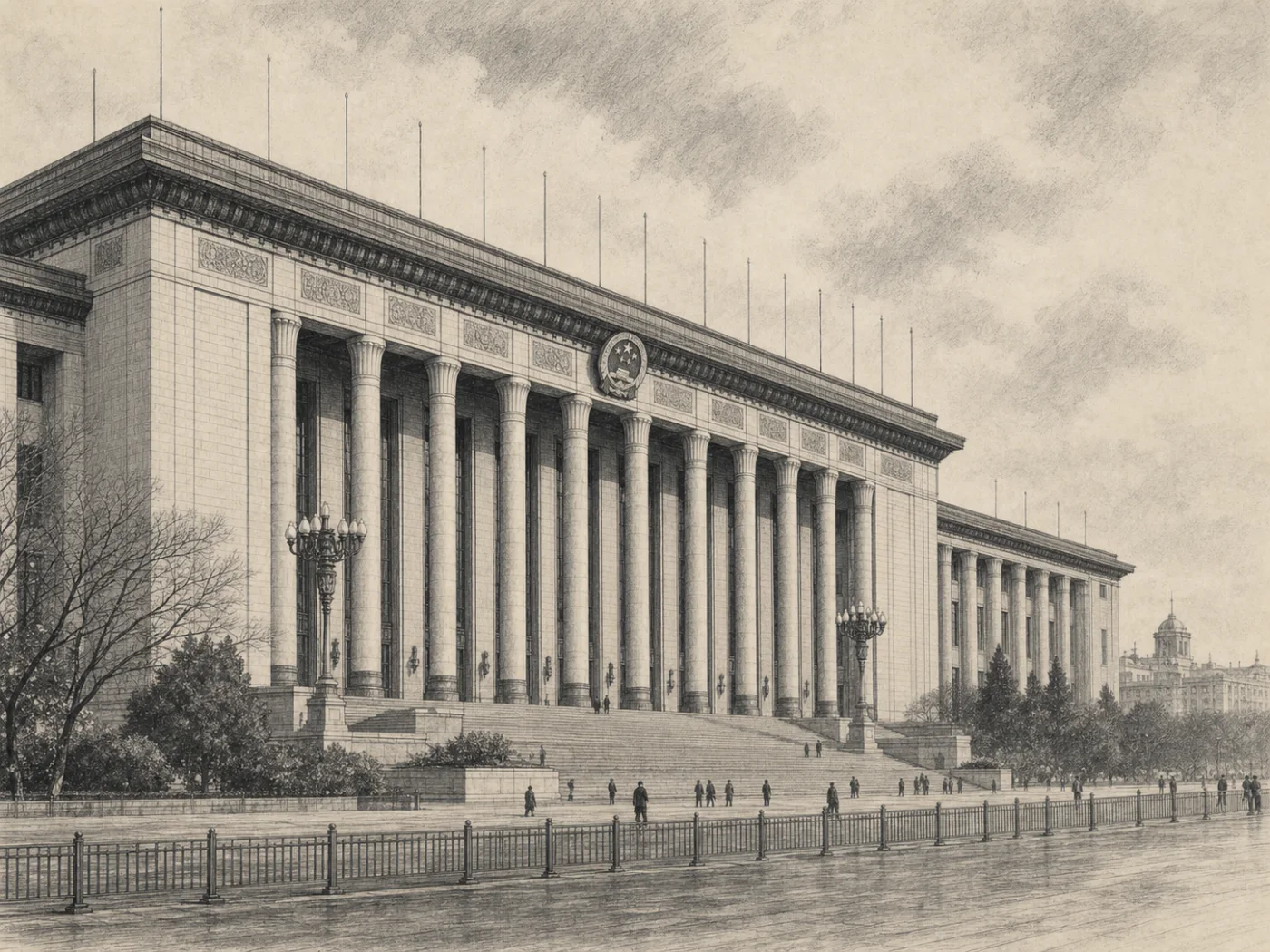
Historical reading v228 · v228 · 19 Nov
Xi welcomes U.S. president in Shenzhen as trilateral summit nears
The U.S.–China relationship is at a pivotal moment: Xi Jinping personally welcomed the U.S. president in Shenzhen on November 18, setting the stage for the first-ever China-Russia-U.S. trilateral summit on November 19. This direct engagement is the strongest signal yet that Beijing seeks to stabilize great-power relations at the highest level, even as structural frictions persist. The key judgment is that Beijing is using the APEC hosting role and the trilateral format to project an image of co-managing global order with Washington and Moscow, while simultaneously deepening ties with the Global South and regional partners as a hedge. The personal welcome by Xi elevates the political atmosphere but does not resolve the underlying tech and trade disputes.
On the same day, Xi delivered a keynote at the APEC CEO Summit, outlining four proposals for building an Asia-Pacific community: safeguarding peace and stability, building open cooperation bridges, boosting innovation-driven growth, and expanding win-win paths 1. He reaffirmed support for the WTO-centered multilateral trading system, the Free Trade Area of the Asia-Pacific (FTAAP), and proposed a World Bay Area Economic Cooperation Alliance. This speech frames China as the champion of open, rules-based trade—a direct contrast to U.S. tech controls. The emphasis on innovation partnerships in AI and digital economy also signals Beijing's intent to shape regional rules on technology, an area where U.S.–China competition is sharpest.
However, the tech friction remains unresolved. The U.S. interim final rule on remote access to advanced semiconductors, issued on November 16, still stands, and Beijing's condemnation as "economic coercion" has not been withdrawn 2. The trilateral summit agenda, as previewed by the MFA, focuses on strategic stability and world peace, not on export controls or AI disputes 3. Thus, the summit may stabilize the political atmosphere without addressing the core tech mechanism. This gap between political engagement and technical friction is the central tension.
Beijing's hedge through Global South and neighborhood diplomacy continues. On November 17, Xi met with Vietnam's To Lam, and Guangdong officials hosted To Lam in Shenzhen, emphasizing party-to-party ties and the China-Vietnam community of shared future 4,5. This reinforces Beijing's ties with a key ASEAN neighbor. Meanwhile, economic diplomacy with multinationals proceeds: Shanghai's Chen Jining met with Roche's Severin Schwan to deepen biopharma cooperation 6, and Jiangsu Governor Liu Xiaotao opened the China-Singapore Life Sciences Park with Temasek's Teo Chee Hean 7. These engagements show that Beijing continues to court foreign investment and technology partnerships, even as it manages U.S. tensions.
The Taiwan issue remains a latent friction point. The Taiwan Affairs Office's November 18 press conference reiterated the commitment to peaceful reunification and opposition to "Taiwan independence" and external interference 8. While not directly linked to the summit, this restates Beijing's core position. The absence of Taiwan from the trilateral agenda may be a deliberate choice to avoid derailing the summit, but it does not reduce the long-term risk.
What this adds up to: a high-level political engagement that stabilizes the U.S.–China relationship at the leader level, but leaves tech and trade frictions unaddressed. Beijing's simultaneous outreach to the Global South, neighbors, and foreign businesses serves as a hedge against U.S. pressure. The APEC CEO Summit speech and the trilateral meeting project China as a responsible great power, but the tech controls and Taiwan issue remain unresolved. Watch whether the trilateral summit produces any concrete mechanism for military or tech talks, and whether the U.S. follows up with further export controls that could undercut the summit's positive atmosphere.
What changed in this reading
How the evidence changed
Comparing v227 with v228. Band width counts distinct cited documents.
Cited in both 3
- Leaders of China, Russia, and the US meet face-to-face for the first time in history
- Foreign Ministry Spokesperson Guo Jiakun Hosts Regular Press Conference on November 17, 2026
- Huang Kunming and Meng Fanli meet with To Lam, General Secretary of the Communist Party of Vietnam Central Committee and President of Vietnam
Newly cited 6
- Xi Jinping meets with General Secretary of the Communist Party of Vietnam Central Committee and State President To Lam -- video report
- Foreign Ministry Spokesperson Guo Jiakun Hosts Regular Press Conference on November 18, 2026
- Transcript of the Taiwan Affairs Office of the State Council Press Conference (2026-11-18)
- Xi Jinping welcomes the US President, video report
- China-Singapore Life Sciences Park opens; Liu Xiaotao meets Teo Chee Hean; Liu Yanling and Fan Bo take part in related events
- Chen Jining Meets with Severin Schwan, Chairman of the Board of Directors of Switzerland's Roche Group
No longer cited 12
- Commerce Ministry: China and the US maintain close communication on tariff cuts, trade, investment and other issues
- Hoping to further elevate Shanghai's headquarters status: Zhu Zhongming meets Coca-Cola CEO James Quincey
- President Xi Jinping leads the Asia-Pacific family forward
- Deepening Exchanges and Cooperation for Mutual Benefit
- Signing ceremony for Shanghai Social Security Sci-Tech Innovation Fund and Shanghai Social Security Preferred Project Fund held in Shanghai; Chen Jining and Zhu Zhongming meet with Liu Kun, Chairman of the National Council for Social Security Fund
- Leaders of China, Russia, and the US to meet face-to-face for the first time; APEC "China Year" yields rich results
- Ren Youqun meets separately with foreign guests from South Africa, Angola, and Brazil
- Guangdong Province holds symposium with companies attending APEC CEO Summit
- Assistant Foreign Minister Liu Bin Meets with Amirbekov, Special Representative of the President of Azerbaijan (2026-11-17)
- Meng Fanli meets with Dhanin Chearavanont and Suphachai Chearavanont of Thailand's Charoen Pokphand Group
- Zhang Guozhi meets with Pfizer Senior Vice President Hou Tingxi
- Heads of state of China, Russia and the US will exchange views in depth on major issues concerning global peace: FM spokesperson
Evidence behind this reading
China Snapshot Limited (Hong Kong). Chinese sources machine-translated by DeepSeek; interpretation drafted by a language model under our editorial standards; corrections to support@china-snapshot.com.