
Historical reading · v227 · 2026-11-18. Read the current understanding and full revision history →
Historical reading v227 · 公开专题 · 中美关系与中国外交
U.S.–China & China's Diplomacy
The U.S.–China relationship and its friction points (tech, trade, Taiwan), set against Beijing's broader great-power and Global South diplomacy — summits, MFA statements, partnerships, and how China frames its global posture.
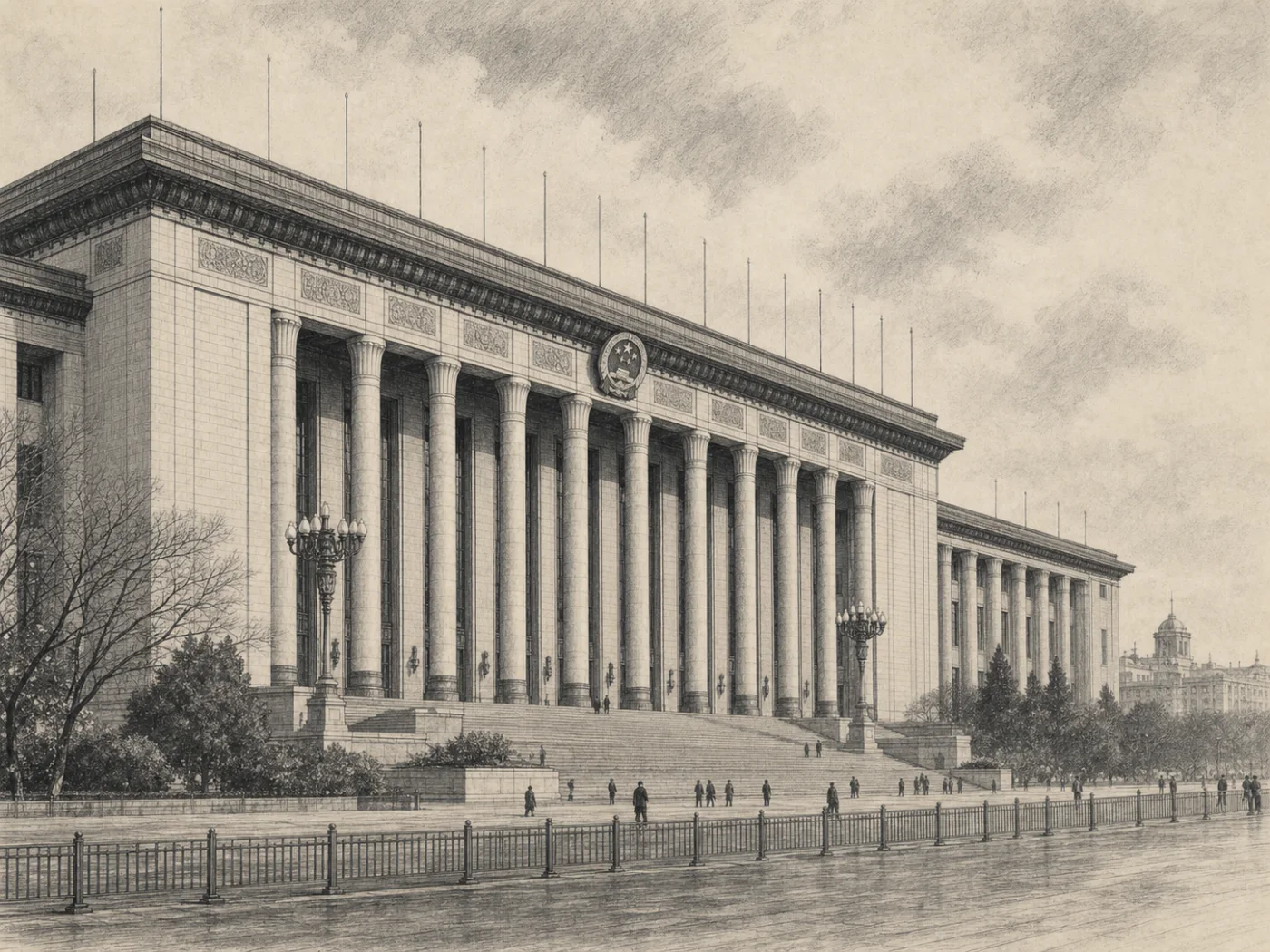
Historical reading v227 · v227 · 18 Nov
China, Russia, US to hold first trilateral summit amid tech friction
The U.S.–China relationship is entering a high-stakes week: Beijing is preparing to host a first-ever trilateral summit with Russia and the U.S. on the sidelines of APEC in Shenzhen, even as Washington tightens tech controls. The key judgment is that Beijing is using its APEC hosting role and the trilateral format to project great-power management while hedging through Global South diplomacy, but the tech friction is intensifying and could overshadow the summit.
On November 16, the U.S. Commerce Department issued an interim final rule restricting remote access to advanced semiconductors, requiring licenses for exports to companies in Singapore, Thailand, Malaysia, Indonesia, and Brazil due to transshipment risks to China 1. MFA spokesperson Guo Jiakun condemned the move as "economic coercion" and "long-arm jurisdiction," vowing necessary countermeasures. This is the sharpest tech friction in the period, and it directly contradicts the earlier "300-for-300" tariff reduction framework that had been under implementation 2. The U.S. action shows that tech controls are escalating even as trade talks continue.
The trilateral summit, confirmed by the MFA on November 16, will bring Xi Jinping, Vladimir Putin, and Donald Trump together in Shenzhen on November 19—the first-ever face-to-face meeting of the three leaders 3,4. Mao Ning framed it around safeguarding world peace and strategic stability, casting the three countries as UN founding members and Security Council permanent members with a shared responsibility. This format lets Beijing engage Washington without a bilateral meeting that would put Taiwan or tech demands on the table, and it positions China as a co-manager of global order alongside Russia and the U.S. However, the agenda does not address export controls or AI disputes, so the summit may stabilize the political atmosphere without resolving the tech mechanism.
APEC remains the primary vehicle for Beijing's openness narrative. Xi will chair the 33rd APEC Economic Leaders' Meeting in Shenzhen on November 18–19 under the theme "building an Asia-Pacific community, promoting common prosperity," with priorities of openness, innovation, and cooperation 5,4. The APEC "China Year" has produced nearly 50 economic and trade outcomes, including the Trade Ministers' Meeting approval of the APEC Services Trade Roadmap for the next decade 4. A People's Daily feature on the 2026 Belt and Road media cooperation forum and the 12th ASEAN-plus-three media seminar reinforces the same line: open cooperation and shared development as the region's default 6. Embedding the trilateral meeting inside APEC gives Beijing agenda-setting power and a multilateral frame for any U.S. contact.
Beijing's hedge continues through Global South and neighborhood diplomacy. Assistant Foreign Minister Liu Bin met with Azerbaijan's presidential special representative, who reaffirmed support for the one-China principle and Xi's four global initiatives 7. Education cooperation is binding the Global South: Vice Minister of Education Ren Youqun met separately with ministers from South Africa and Angola and a Brazilian university delegation, promoting Chinese-language education, vocational cooperation, and the "Chinese +" program 8. In parallel, MFA special envoys fanned out to seven countries in the Middle East, Gulf, Red Sea, and Horn of Africa, with Mao framing the trips as implementing Xi's Middle East peace initiative and four principles on African hot spots 3. This is conflict-mediation and capacity-building diplomacy that builds Global South credentials independent of Washington.
Subnational corporate diplomacy keeps Western and regional capital engaged. Shanghai Mayor Zhu Zhongming asked Coca-Cola CEO James Quincey to raise the standing of its Shanghai headquarters in the company's global layout and debut more global and limited products in the city first 9. Guangdong Governor Meng Fanli met with Thailand's Charoen Pokphand Group and hosted a symposium with companies attending the APEC CEO Summit, urging them to invest in Guangdong and the Greater Bay Area 10,11. These channels run beneath the summit and signal that Beijing wants investment flowing even as it manages the U.S. politically.
What this adds up to: a trilateral summit that stabilizes great-power politics without resolving tech or trade, an APEC hosting role that amplifies Beijing's openness narrative, and a hedge built through Global South party and education outreach, Middle East and Africa mediation, and CEO diplomacy. The new U.S. semiconductor rule is a reminder that the tech fight is escalating, not abating. Watch whether the Shenzhen trilateral produces a concrete mechanism for U.S.–China military or tech talks, whether the APEC leaders' declaration delivers real trade and AI language, and whether the U.S. follows up with further export controls that could undercut the summit glow.
What changed in this reading
New documents confirm the trilateral summit and APEC arrangements, with MFA spokesperson Guo Jiakun providing more detail on the summit's focus on global peace 12. Subnational diplomacy continues with meetings between Guangdong leaders and Thai and Pfizer executives, and between Shanghai leaders and the Social Security Fund chairman 13,14,15. No material shift in the overall assessment.
How the evidence changed
Comparing v226 with v227. Band width counts distinct cited documents.
Cited in both 11
- Commerce Ministry: China and the US maintain close communication on tariff cuts, trade, investment and other issues
- Hoping to further elevate Shanghai's headquarters status: Zhu Zhongming meets Coca-Cola CEO James Quincey
- President Xi Jinping leads the Asia-Pacific family forward
- Deepening Exchanges and Cooperation for Mutual Benefit
- Leaders of China, Russia, and the US meet face-to-face for the first time in history
- Leaders of China, Russia, and the US to meet face-to-face for the first time; APEC "China Year" yields rich results
- Ren Youqun meets separately with foreign guests from South Africa, Angola, and Brazil
- Guangdong Province holds symposium with companies attending APEC CEO Summit
- Foreign Ministry Spokesperson Guo Jiakun Hosts Regular Press Conference on November 17, 2026
- Assistant Foreign Minister Liu Bin Meets with Amirbekov, Special Representative of the President of Azerbaijan (2026-11-17)
- Meng Fanli meets with Dhanin Chearavanont and Suphachai Chearavanont of Thailand's Charoen Pokphand Group
Newly cited 4
- Signing ceremony for Shanghai Social Security Sci-Tech Innovation Fund and Shanghai Social Security Preferred Project Fund held in Shanghai; Chen Jining and Zhu Zhongming meet with Liu Kun, Chairman of the National Council for Social Security Fund
- Huang Kunming and Meng Fanli meet with To Lam, General Secretary of the Communist Party of Vietnam Central Committee and President of Vietnam
- Zhang Guozhi meets with Pfizer Senior Vice President Hou Tingxi
- Heads of state of China, Russia and the US will exchange views in depth on major issues concerning global peace: FM spokesperson
No longer cited 0
Evidence behind this reading
China Snapshot Limited (Hong Kong). Chinese sources machine-translated by DeepSeek; interpretation drafted by a language model under our editorial standards; corrections to support@china-snapshot.com.