
Historical reading · v174 · 2026-09-28. Read the current understanding and full revision history →
Historical reading v174 · 公开专题 · 中美关系与中国外交
U.S.–China & China's Diplomacy
The U.S.–China relationship and its friction points (tech, trade, Taiwan), set against Beijing's broader great-power and Global South diplomacy — summits, MFA statements, partnerships, and how China frames its global posture.
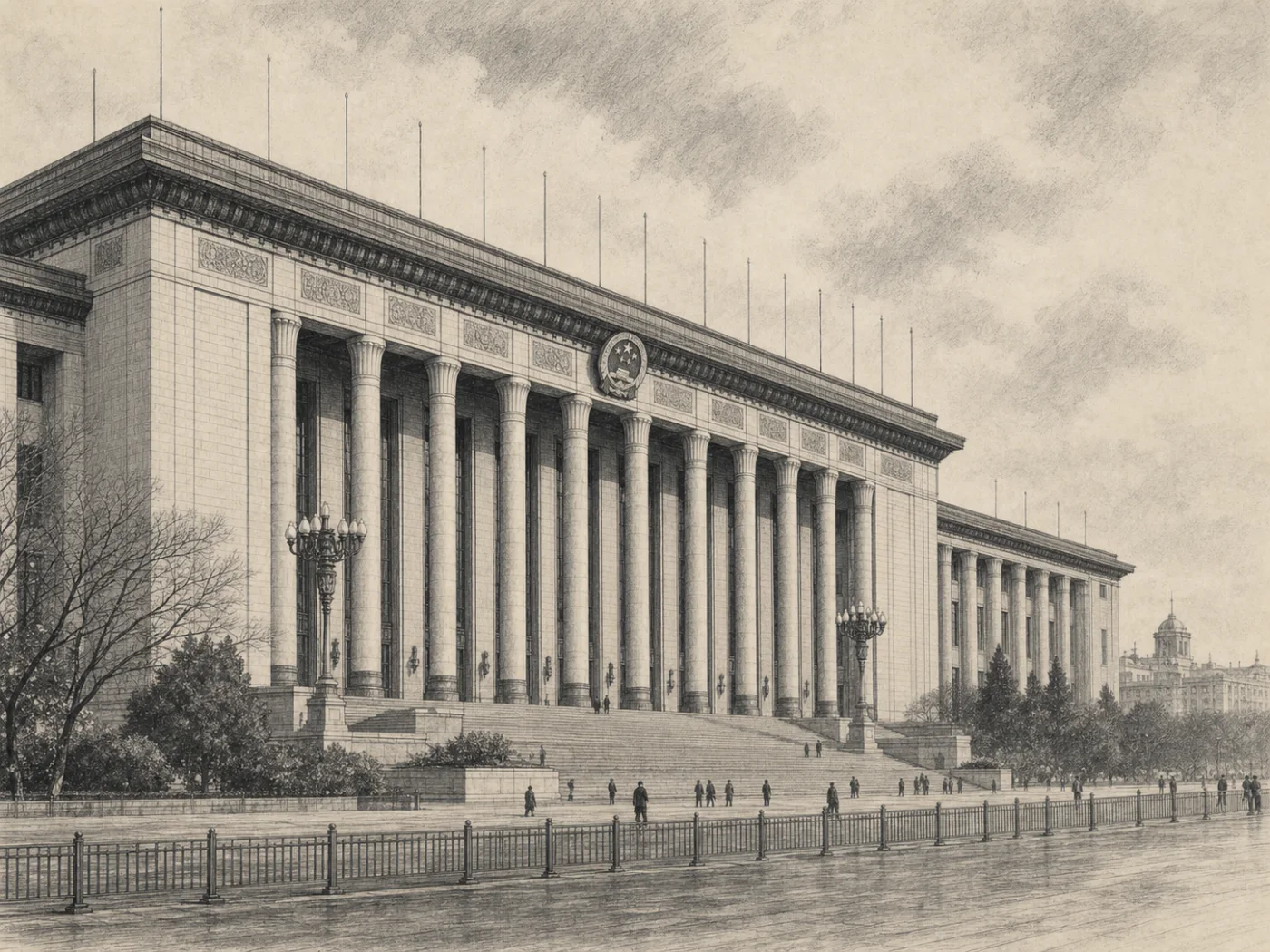
Historical reading v174 · v174 · 28 Sep
U.S.–China summit stays formulaic; Beijing's non-U.S. diplomacy carries the substance.
The U.S.–China temperature is unchanged: a presidential channel that reopened but delivered no friction-point outcome. Xi Jinping's Sept 23–25 state visit to Washington produced, in Beijing's telling, "a series of important consensuses" headlined by a "China–U.S. constructive strategic stability relationship based on respect, fairness and reciprocity" — but the MFA readout names no joint document, no tariff, chip or Taiwan deliverable 1. Five days later, Guo Jiakun's Sept 28 press conference repeats the formula and the single concrete result: the two sides "support each other" in hosting APEC (China's year) and the G20 (Washington's) 1. That is real but procedural — a mutual non-spoiler pledge on each other's signature multilateral stages, not a settlement.
Because the bilateral channel yields only language, Beijing's posture is better read from its other diplomacy — and this week that ran through the neighborhood and the Gulf. On Sept 28, Assistant Foreign Minister Liu Bin held MFA consultations with Kazakhstan's Deputy Foreign Minister Isagaliyev, framing ties as a "permanent comprehensive strategic partnership" moving into a "China–Kazakhstan community of shared future" stage 2. The tell is what Astana endorsed: Liu said Beijing wants closer high-level exchanges and multilateral coordination, and Isagaliyev replied that Kazakhstan "supports the four global initiatives put forward by President Xi" 2 — the umbrella (the Global Development, Global Security and Global Civilization Initiatives plus AI governance) that Beijing markets as an alternative governance offer.
Two receptions the same week show the same pattern on other vectors. Liu attended Saudi Arabia's 96th National Day, marking ten years of the China–Saudi comprehensive strategic partnership and stressing that Beijing will keep contributing to Middle East/Gulf peace and to "promoting peace talks" (劝和促谈) 3. He also attended South Korea's National Day and Armed Forces Day, saying China will implement the leaders' consensus and keep ties "healthy and stable" 4. These are ceremonial, not substantive — nothing was signed — but the guest list is the signal: Beijing keeps the Gulf and a U.S. ally in Northeast Asia on its calendar while the U.S. file runs on autopilot.
The substantive Chinese diplomacy remains the Global Development Initiative, now at its five-year marker. The Sept 25 high-level dialogue at UN headquarters drew 300-plus guests and a Xi Jinping congratulatory letter; Han Zheng delivered a four-point proposal whose one new pledge is training 10,000 engineers for developing countries over five years 1. The running tally Beijing cites: 230-plus billion USD mobilized, 2,000-plus projects in 120-plus countries, and the Global Development and South-South Cooperation Fund active in 70-plus countries for 40 million-plus people 5. This is institution-building China steers — the parallel track that hedges against U.S. pressure.
The functional lanes keep delivering while the summit stays rhetorical. NEA head Wang Hongzhi signed a three-year NEA–IEA cooperation plan with Fatih Birol, met Singapore's Yan Xiaofang on APEC energy cooperation and power interconnection, and Peru's Guillermo Xinye on oil, gas, renewables, storage and green mining 6,7,8. PBOC's Pan Gongsheng met Hong Kong's Paul Chan Mo-po and regulators on the offshore renminbi and market connectivity 9; NDRC's Zheng Shanjie met Indonesia's Luhut on aligning development strategies 10; and Li Qiang's Hangzhou digital-trade pitch — open-source AI, a "digital ladder" every country can climb — sits in the same lane 11. The cross-strait track is now delivering rather than announcing: Taiwanese pomelo on mainland supermarket, wet-market and e-commerce shelves, and a 400-guest Mid-Autumn gathering at Yanqi Lake, both traced to the April measures 12.
The throughline: Beijing got the U.S. meeting it wanted, framed it in its own stability language, and kept building the forums and instruments it can steer. The limit is that none of the friction points moved — no tariff, chip or Taiwan outcome is reported — so the summit is best read as de-risking the bilateral channel while the Global South and functional tracks carry the substantive load. Watch four things: whether any joint U.S.–China text actually uses "constructive strategic stability"; whether the APEC host year converts into China-set agenda items; whether the GDI 10,000-engineer pledge gets a named funding mechanism; and whether the April cross-strait measures broaden beyond agriculture and consumer goods.
What changed in this reading
New this period: Liu Bin's MFA consultations with Kazakhstan, where Astana endorsed Xi's "four global initiatives," plus his attendance at Saudi Arabia's National Day (10th anniversary of the comprehensive strategic partnership) and South Korea's national-day reception 2,3,4. These add neighborhood/Gulf texture but confirm rather than shift the read; the U.S.–China picture — stability language only, no friction-point deliverable — is unchanged 1.
How the evidence changed
Comparing v173 with v174. Band width counts distinct cited documents.
Cited in both 9
- Head of National Energy Administration meets with Peruvian Minister of Energy and Mines
- Head of the National Energy Administration Meets with IEA Executive Director and Jointly Signs the Three-Year Cooperation Plan
- Head of the National Energy Administration Meets with Singapore's Senior Minister of State for Foreign Affairs and Trade and Industry
- Director Zheng Shanjie Meets with Luhut, Chairman of Indonesia's National Economic Council
- People's Bank of China Governor Pan Gongsheng meets with Hong Kong SAR Financial Secretary Paul Chan Mo-po and his delegation
- Foreign Ministry Spokesperson Guo Jiakun Hosts Regular Press Conference on September 21, 2026
- Taiwan Affairs Office of the State Council Press Conference Transcript (2026-09-23)
- Foreign Ministry Spokesperson Guo Jiakun Chairs a Regular Press Conference on September 24, 2026
- Foreign Ministry Spokesperson Guo Jiakun Hosts Regular Press Conference on September 28, 2026
Newly cited 3
- Assistant Foreign Minister Liu Bin Attends Reception Marking the Republic of Korea's National Day and Armed Forces Day (2026-09-23)
- Assistant Minister of Foreign Affairs Liu Bin Attends Saudi National Day Reception (2026-09-23)
- Assistant Foreign Minister Liu Bin Holds Foreign Ministry Consultations with Kazakh Deputy Foreign Minister Isagaliyev (2026-09-28)
Evidence behind this reading
China Snapshot, a publication of CHINA SNAPSHOT LIMITED (Hong Kong). Operated by Tristan McInnis, Managing Partner, Inner Chapter, Shanghai. Chinese sources machine-translated by DeepSeek; interpretation drafted by a language model under our editorial standards; corrections to support@china-snapshot.com.