
Historical reading · v165 · 2026-09-18. Read the current understanding and full revision history →
Historical reading v165 · 公开专题 · 中美关系与中国外交
U.S.–China & China's Diplomacy
The U.S.–China relationship and its friction points (tech, trade, Taiwan), set against Beijing's broader great-power and Global South diplomacy — summits, MFA statements, partnerships, and how China frames its global posture.
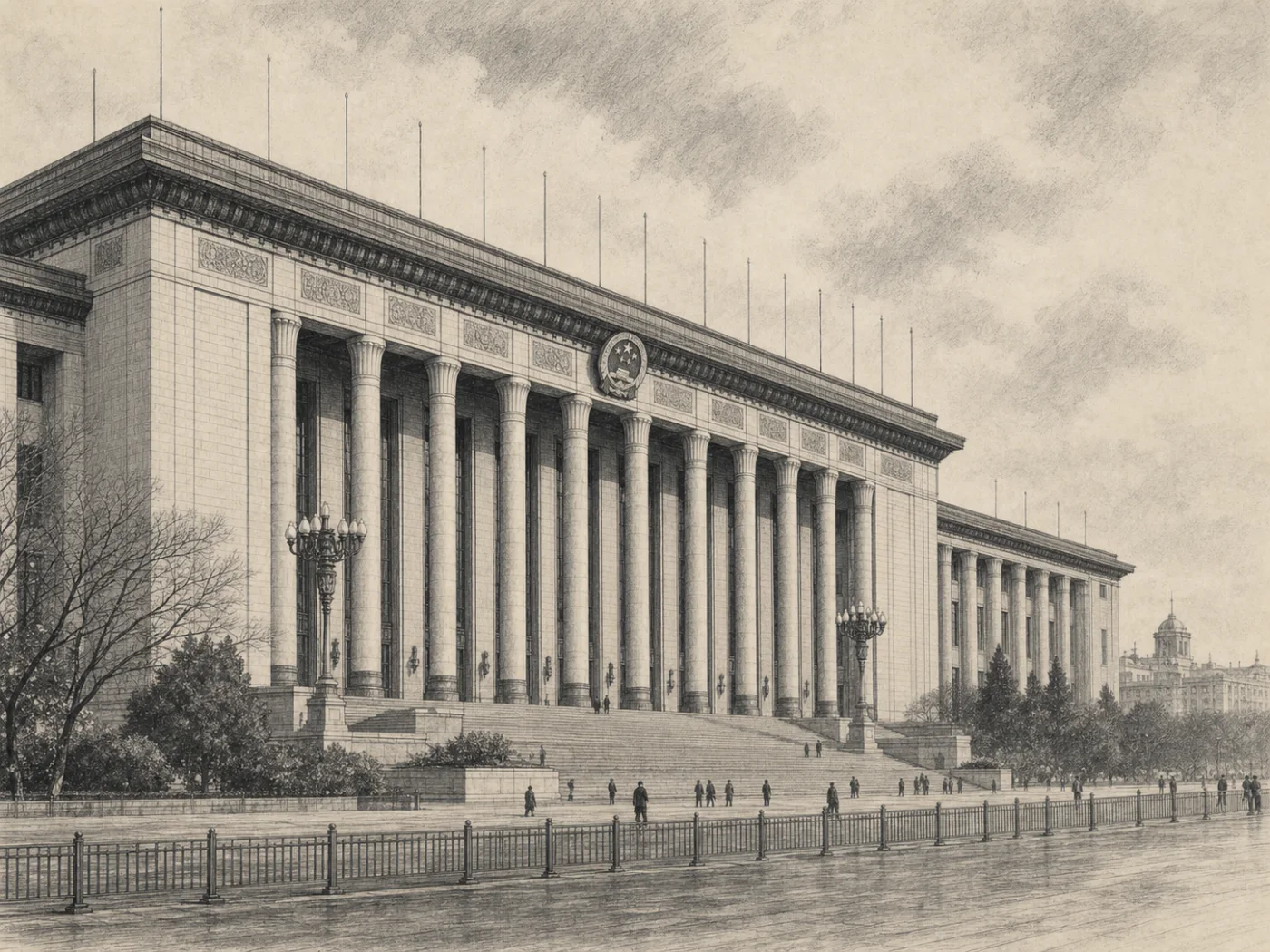
Historical reading v165 · v165 · 18 Sep
MFA confirms live Xi–Trump channel for within-year meeting; no date
The U.S.–China leader channel is no longer frozen in silence. Asked directly on Sept 18 whether Xi Jinping will visit the U.S. and when, MFA spokesman Guo Jiakun said the two sides "are maintaining communication on arrangements for head-of-state interaction within the year" 1. That is the first confirmation in this run of a live Xi–Trump channel and an implicit acknowledgment that a meeting is being scheduled for 2026 — but with no date and no venue, it is a placeholder, not an outcome. Everything else in the period still reads as Beijing building position ahead of whatever that interaction becomes.
The non-U.S. diplomacy continues to run the same two lanes. Brazil's presidential chief special adviser Amorim met Wang Yi in Beijing on Sept 16 and delivered Lula's letter to Xi Jinping; the MFA frames China–Brazil as having crossed from comprehensive strategic partnership to a "community with a shared future", with Xi and Lula in constant contact 2. Asked about mounting U.S. pressure on Brazil before its election — criticism of Brasília's organized-crime handling and possible sanctions on Supreme Court justices — Guo invoked non-interference and wished Brazil a "smooth, successful" election 2. Beijing is selling sovereignty-respecting partnership to a Global South democracy under U.S. pressure, and letting the contrast do the work without naming Washington.
Southeast Asia and energy governance carry the same logic of presence. On Sept 17 NDRC director Zheng Shanjie met Luhut, chairman of Indonesia's National Economic Council, to align development strategies and "cultivate new momentum" for global growth 3. Two days earlier Vice FM Miao Deyu attended Malaysia's 69th National Day reception, met ambassador Norman, and flagged artificial intelligence as the next "highlight" of a relationship already recast as a high-level strategic China–Malaysia community with a shared future; Malaysia reciprocated by endorsing the four global initiatives 4. On energy, NEA head Wang Hongzhi signed a three-year NEA–IEA cooperation plan with Fatih Birol on Sept 11 5, worked Peru on oil, gas, power, renewables and green mining around the APEC energy ministerial 6, and Singapore on grid interconnection, joint research and talent exchange 7, while NDRC vice chairman Zhou Haibing met Peru's energy minister Xinye the same week on minerals and supply-chain stability 8. Both APEC and the IEA include the United States — Beijing accumulates standing inside the U.S.-anchored architecture while negotiating bilaterally with the members that matter to its chains.
BRICS remains the load-bearing parallel structure. Xi attended the 18th leaders' meeting in New Delhi on Sept 12–13, cast the grouping as the Global South's "first phalanx" (第一方阵), and announced China-designed deliverables — a BRICS AI open-source zone, a digital industry cloud platform and a youth sci-tech exchange plan — framed as capacity-building so Global South states "benefit equally" 9,10. China takes the chair next year and hosts the 19th summit, billed as a third "golden decade". Read against U.S.-led tech controls, this is institutional ambition aimed squarely at the constituency those controls exclude.
The sharpest counter-signals sit on the Japan, maritime and EU files. On Sept 18, the 95th anniversary of the Mukden Incident, Guo accused Japan of spreading "denialism" and of right-wing forces using AI to systematically filter pre-war archives and Tokyo Trial records to whitewash war guilt, warning the region must "never allow Japanese militarism to revive" 1. That follows Assistant Minister Liu Bin's Sept 14 message to the Japan-China Friendly Parliamentarians League that PM Takaichi's Taiwan remarks are the "biggest crux" in relations, and the MFA's rejection of the Philippines' claim to Mischief and Subi reefs 11. A second trade front opened when the EU asked China to cap hybrid-vehicle market share in Europe below 15% to avoid a "trade war"; Guo deflected to competent departments while calling China–EU trade mutually beneficial 1.
The U.S. ledger otherwise runs below the leader level. The business track stays separate from the political channel — the NDRC's Sept 10 "Embracing the 15th Five-Year Plan" roundtable drew roughly 100 representatives from AmCham China, USCBC and 60-plus U.S. firms 12 — while MOFCOM extended its anti-dumping probe into U.S. and Mexican pecans to March 25, 2027 13. Beijing keeps showcasing openness: CIFTIS drew 1,830-plus offline and 5,300-plus online exhibitors with 1,200-plus outcomes 11, and the 40th Global Financial Centres Index placing Hong Kong third globally was read as another "vote of confidence" in one country, two systems 2.
The implication is a two-track posture that has just become more explicit: confirm a leader channel exists while refusing to specify it, harden the Japan and EU fronts where Washington's allies rather than Washington itself bear the pressure, and keep accumulating Global South credit through Brazil, Indonesia, Malaysia and the energy institutions. Watch whether the Xi–Trump interaction gets a date and venue or stays a placeholder, whether the BRICS AI and cloud platforms become institutions rather than slogans, and whether the EU's hybrid-EV demand converts into a formal trade measure.
What changed in this reading
The MFA on Sept 18 confirmed for the first time that China and the U.S. are maintaining communication on a within-year head-of-state interaction, shifting from the prior brief's finding of total silence on the leader channel — though no date or venue was given 1. Japan rhetoric escalated on the Mukden Incident's 95th anniversary, with Beijing accusing Tokyo of "denialism" and of AI-filtered pre-war archives 1, and the EU's demand to cap Chinese hybrid-vehicle share below 15% added a second trade front 1.
How the evidence changed
Comparing v164 with v165. Band width counts distinct cited documents.
Cited in both 12
- Embracing the 15th Five-Year Plan and Jointly Pursuing New Development: NDRC High-Level Roundtable with U.S. Multinational Companies in China Held in Beijing
- Ministry of Commerce Announcement No. 38 of 2026: Decision Announced to Extend the Anti-Dumping Investigation on Imported Pecans Originating in Mexico and the United States
- Foreign Ministry Spokesperson Mao Ning Holds a Regular Press Conference on September 11, 2026
- Vice Chairman Zhou Haibing Meets with Peruvian Minister of Energy and Mines Xinye
- Foreign Ministry Spokesperson Guo Jiakun Hosts Regular Press Conference on September 14, 2026
- Head of National Energy Administration meets with Peruvian Minister of Energy and Mines
- September 15, 2026: Foreign Ministry Spokesperson Guo Jiakun Hosts Regular Press Conference
- Vice Foreign Minister Miao Deyu Attends Malaysia's National Day Reception (2026-09-16)
- Head of the National Energy Administration Meets with IEA Executive Director and Jointly Signs the Three-Year Cooperation Plan
- Head of the National Energy Administration Meets with Singapore's Senior Minister of State for Foreign Affairs and Trade and Industry
- Foreign Ministry Spokesperson Guo Jiakun held a regular press conference on September 17, 2026.
- Director Zheng Shanjie Meets with Luhut, Chairman of Indonesia's National Economic Council
Newly cited 1
No longer cited 0
Evidence behind this reading
China Snapshot, a publication of CHINA SNAPSHOT LIMITED (Hong Kong). Operated by Tristan McInnis, Managing Partner, Inner Chapter, Shanghai. Chinese sources machine-translated by DeepSeek; interpretation drafted by a language model under our editorial standards; corrections to support@china-snapshot.com.