
Historical reading · v137 · 2026-08-28. Read the current understanding and full revision history →
Historical reading v137 · 公开专题 · 中美关系与中国外交
U.S.–China & China's Diplomacy
The U.S.–China relationship and its friction points (tech, trade, Taiwan), set against Beijing's broader great-power and Global South diplomacy — summits, MFA statements, partnerships, and how China frames its global posture.
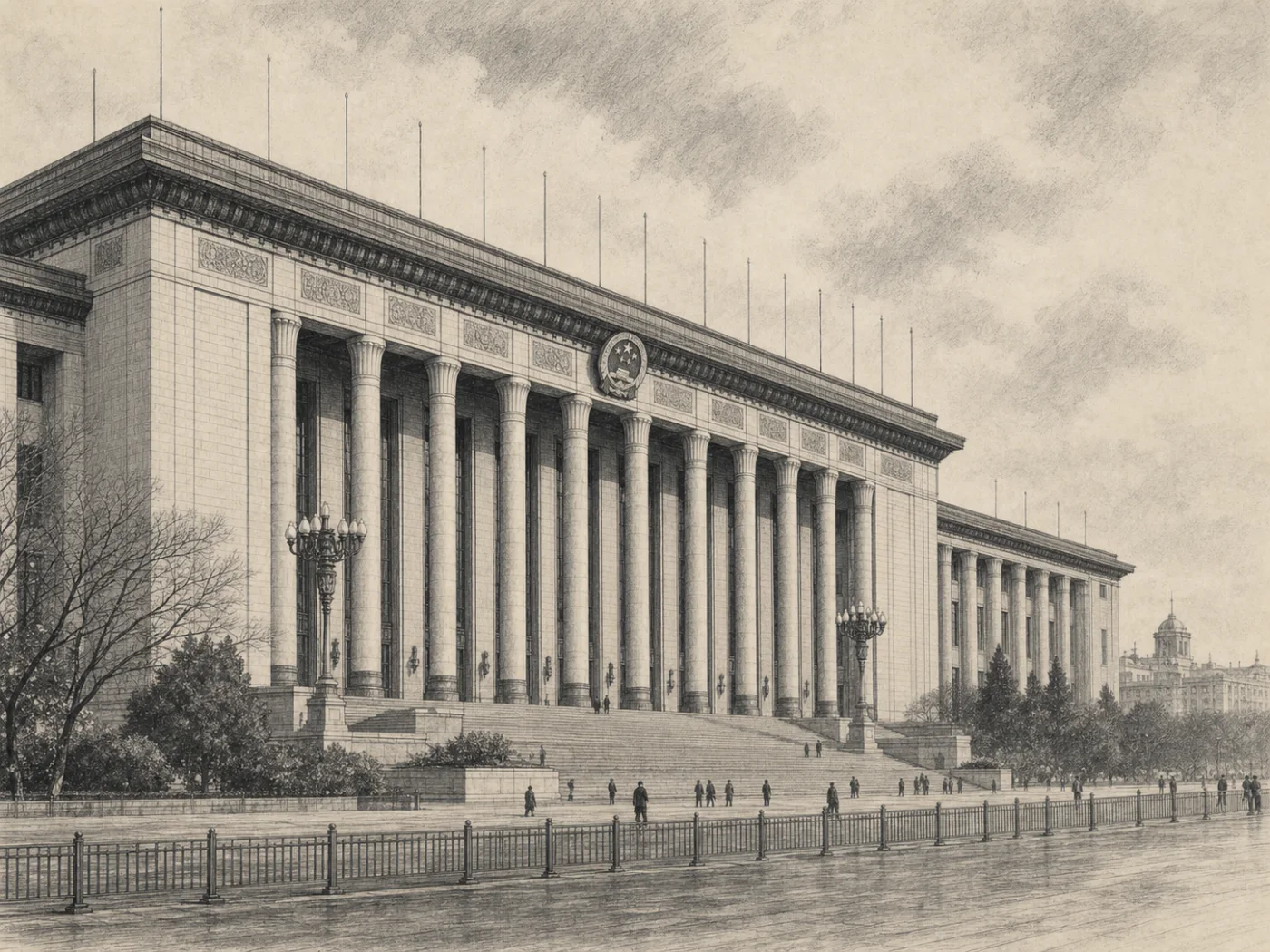
Historical reading v137 · v137 · 28 Aug
U.S.–China standoff persists; Beijing hedges via Japan, Nepal, SCO
The U.S.–China relationship remains a managed standoff. This tranche contains no principals-level bilateral contact; the only U.S.-China item continues to be the track-two meeting between Vice Foreign Minister Ma Zhaoxu and Asia Society Co-Chair John Thornton 1. Beijing is instead doubling down on parallel diplomacy—party-to-party ties with Japan, a high-profile South Asia rescue operation, and a Central Asian summit push—to hedge against a frozen Washington channel.
The clearest confirmation is the Japan track. At his Aug 27 regular press conference, MFA spokesman Lin Jian confirmed that visiting Japanese lawmakers met the same day with officials of the CPC International Department (中联部) 2. Japan is a U.S. treaty ally, so keeping a party-to-party line open while official U.S.–China channels are dormant is a deliberate hedging move, not a thaw. No details of the meeting's content were given, suggesting an exploratory but active channel. The choice of the CPC International Department rather than the MFA is itself a signal: Beijing is using a track that is less vulnerable to diplomatic freeze.
The same press conference provided the fullest official picture yet of China's response to the Aug 26 landslide on the Nepal side of Gyirong port, which caused heavy casualties and missing persons. Lin said the State Council activated a level II national disaster response, Tibet upgraded to a level I rescue response, and military, armed police, border-control and fire-rescue units were sent to the site. He stated that 260 foreign nationals are initially confirmed missing in the affected area, and that nearly 100 Chinese citizens are missing on the Nepali side, with the embassy issuing consular alerts 2. China pledged emergency assistance to Nepal. This is humanitarian diplomacy in the near abroad and a concrete data point for Beijing's Global South posture.
Xi Jinping's Aug 30–Sep 3 trip is now dated: he will attend the SCO summit in Bishkek and make state visits to Kyrgyzstan and Egypt. The previews frame it as carrying the 'Shanghai Spirit' and pooling Global South strength into a 'community with a shared future' 3,4. With the U.S. track frozen, the SCO is the institutional vehicle for Beijing's alternative narrative of multilateralism.
Provincial and party diplomacy continues to fill the space. Shandong's Aug 26 matchmaking conference with Vietnam's Bac Ninh province, featuring party secretaries Lin Wu and Nguyen Hong Thai, pledged cooperation in electronics, semiconductors, transport and agricultural processing under BRI and Two Corridors One Belt 5. Xinjiang party secretary Chen Xiaojiang met Punjab Chief Minister Maryam on Aug 25, pledging deeper CPEC cooperation in agriculture, green mining, textiles and security 6. Hubei's party secretary met China Energy Engineering Group on new energy storage and hydrogen 7. These are the workhorses of Beijing's economic statecraft while the official U.S. track is dormant.
The limits are unchanged: no Taiwan variable appears in this tranche, and friction with Washington is still trade- and sanctions-led. The U.S.–Canada tariff dispute—Washington imposing 50% duties on C$20 billion of Canadian goods—continues to reinforce the official narrative that the U.S. is an unreliable partner even with allies 8. Net assessment: resolve-plus-hedging intact, with the hedging diversified precisely because the U.S. channel shows no sign of reopening. For outside readers, the takeaway is that Beijing is not waiting for Washington: it is building alternative relationships at the party, provincial and multilateral levels, and the U.S.–China temperature will be set by whatever the next tranche of U.S. actions—tariffs, export controls, Taiwan arms sales—brings.
What changed in this reading
The new tranche adds hard specifics to the existing hedging picture: the MFA press conference confirms the Japan party-to-party meeting and details the Nepal rescue (level II response, 260 foreign citizens missing, nearly 100 Chinese citizens missing on the Nepali side) 2; the SCO trip dates are now set (Aug 30–Sep 3) 3,4; and a new Xinjiang–Punjab CPEC meeting adds another Global South plank 6. None of these alter the standing assessment of a managed U.S.–China standoff.
How the evidence changed
Comparing v136 with v137. Band width counts distinct cited documents.
Cited in both 5
- Vice Foreign Minister Ma Zhaoxu Meets with Asia Society Co-Chair Thornton and Delegation (2026-08-25)
- 2026 Shandong-Vietnam Economic and Trade Cooperation and Enterprise Matchmaking Conference held
- Guan Zhi'ou meets with Chairman Ni Zhen of China Energy Engineering Group
- Foreign Ministry Spokesperson Lin Jian's Regular Press Conference on August 27, 2026
- US-Canada tariff war reignites: refusing 'bullying', where does Canada's confidence come from?
Newly cited 3
Evidence behind this reading
| # | Document | Publisher | Published |
|---|---|---|---|
| 01 | Vice Foreign Minister Ma Zhaoxu Meets with Asia Society Co-Chair Thornton and Delegation (2026-08-25) | MFA (news) | 2026-08-25 |
| 02 | Foreign Ministry Spokesperson Lin Jian's Regular Press Conference on August 27, 2026 | MFA (spokesperson) | 2026-08-27 |
| 03 | Preview: President Xi Jinping to attend SCO summit and visit Kyrgyzstan and Egypt | MOT | · |
| 04 | Preview: President Xi Jinping to attend SCO summit and visit Kyrgyzstan and Egypt | Sichuan Provincial Government | 2026-08-27 |
| 05 | 2026 Shandong-Vietnam Economic and Trade Cooperation and Enterprise Matchmaking Conference held | Shandong Provincial Government | 2026-08-27 |
| 06 | Chen Xiaojiang met with Maryam, Chief Minister of Punjab, Pakistan. | Xinjiang Uyghur Autonomous Region Government | · |
| 07 | Guan Zhi'ou meets with Chairman Ni Zhen of China Energy Engineering Group | Hubei Provincial Government | 2026-08-27 |
| 08 | US-Canada tariff war reignites: refusing 'bullying', where does Canada's confidence come from? | Yicai | 2026-08-26 |
China Snapshot, a publication of CHINA SNAPSHOT LIMITED (Hong Kong). Operated by Tristan McInnis, Managing Partner, Inner Chapter, Shanghai. Chinese sources machine-translated by DeepSeek; interpretation drafted by a language model under our editorial standards; corrections to support@china-snapshot.com.